
UN Sustainable Development Goals Microcredential
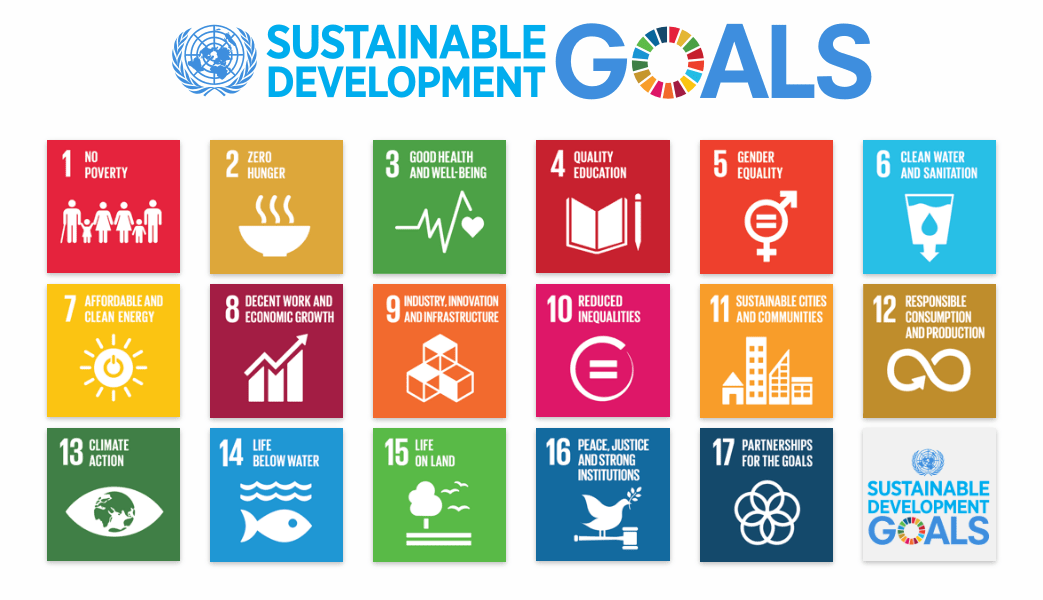
Sustainable Development Goals, also referred to as SDGs, consist of 17 different goals that are a part of the 2030 Agenda for Sustainable Development. This agenda was agreed upon by all state members of the United Nations in 2015. The fundamental aim of the SDGs is to increase peace and prosperity across the world, and to address the global challenges that people are facing.
Each goal has multiple targets and indicators to track progress. Explore all 17 goals below, complete the UN SDG course, then take the quiz to earn your microcredential certificate.
Explore the SDGs
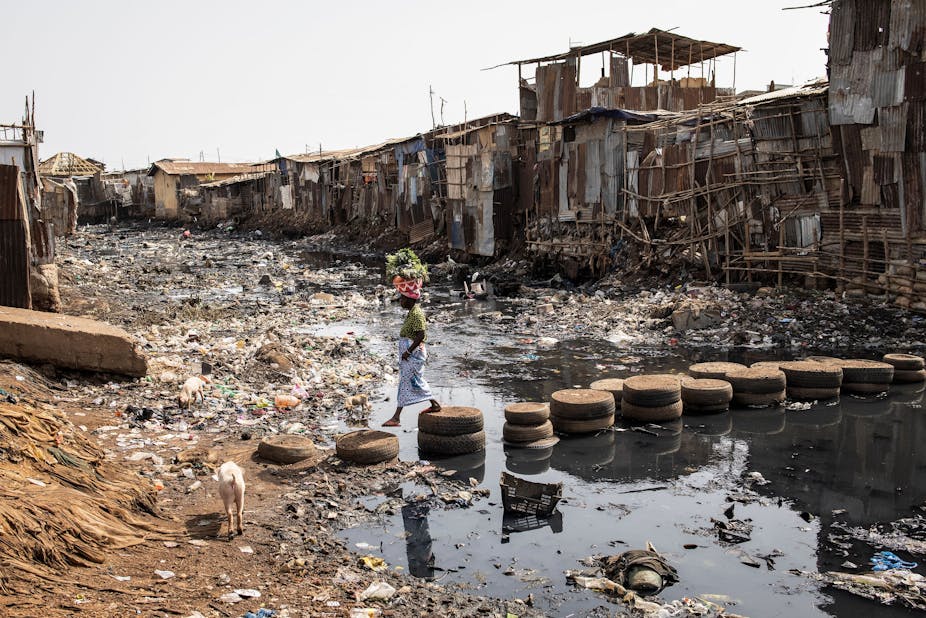
Image Source: https://theconversation.com/ethnic-poverty-dividing-and-excluding-people-keeps-them-poor-182457
Goal 1: No Poverty – End poverty in all its forms everywhere
SDG Goal 1, “No Poverty,” aims to eradicate extreme poverty and reduce the overall poverty rate globally. It focuses on ensuring equal access to economic resources, basic services, and social protection systems for all, particularly the most vulnerable populations. The goal seeks to create policy frameworks at national and international levels to support the poor and marginalized. By 2030, it aims to end extreme poverty for all people everywhere, currently measured as living on less than $1.25 a day. Additionally, it seeks to reduce at least by half the proportion of men, women, and children living in poverty in all its dimensions according to national definitions. Individuals can help achieve this goal by donating to NGOs and organizations that help address these issues. Also, they can volunteer at local food banks or with organizations to provide assistance to those in need.
Target 1.1:
By 2030, eradicate extreme poverty for all people everywhere, currently measured as people living on less than $1.25 a day.
- Indicator 1.1.1: Proportion of the population living below the international poverty line by sex, age, employment status, and geographical location (urban/rural).
Target 1.2:
By 2030, reduce at least by half the proportion of men, women, and children of all ages living in poverty in all its dimensions according to national definitions.
- Indicator 1.2.1: Proportion of population living below the national poverty line, by sex and age.
- Indicator 1.2.2: Proportion of men, women, and children of all ages living in poverty in all its dimensions according to national definitions.
Target 1.3:
Implement nationally appropriate social protection systems and measures for all, including floors, and by 2030 achieve substantial coverage of the poor and the vulnerable.
- Indicator 1.3.1: Proportion of population covered by social protection floors/systems, by sex, distinguishing children, unemployed persons, older persons, persons with disabilities, pregnant women, newborns, work-injury victims, and the poor and the vulnerable.
Target 1.4:
By 2030, ensure that all men and women, in particular the poor and the vulnerable, have equal rights to economic resources, as well as access to basic services, ownership and control over land and other forms of property, inheritance, natural resources, appropriate new technology and financial services, including microfinance.
- Indicator 1.4.1: Proportion of population living in households with access to basic services.
- Indicator 1.4.2: Proportion of total adult population with secure tenure rights to land, (a) with legally recognized documentation, and (b) who perceive their rights to land as secure, by sex and by type of tenure.
Target 1.5:
By 2030, build the resilience of the poor and those in vulnerable situations and reduce their exposure and vulnerability to climate-related extreme events and other economic, social, and environmental shocks and disasters.
- Indicator 1.5.1: Number of deaths, missing persons, and directly affected persons attributed to disasters per 100,000 population.
- Indicator 1.5.2: Direct economic loss attributed to disasters in relation to global gross domestic product (GDP).
- Indicator 1.5.3: Number of countries that adopt and implement national disaster risk reduction strategies in line with the Sendai Framework for Disaster Risk Reduction 2015-2030.
- Indicator 1.5.4: Proportion of local governments that adopt and implement local disaster risk reduction strategies in line with national disaster risk reduction strategies.
Target 1.a:
Ensure significant mobilization of resources from a variety of sources, including through enhanced development cooperation, in order to provide adequate and predictable means for developing countries, in particular least developed countries, to implement programmes and policies to end poverty in all its dimensions.
- Indicator 1.a.1: Total official development assistance grants from all donors that focus on poverty reduction as a share of the recipient country’s gross national income.
- Indicator 1.a.2: Proportion of total government spending on essential services (education, health, and social protection).
Target 1.b:
Create sound policy frameworks at the national, regional, and international levels, based on pro-poor and gender-sensitive development strategies, to support accelerated investment in poverty eradication actions.
- Indicator 1.b.1: Pro-poor public social spending.

Image Source: https://www.worldvision.ca/stories/child-sponsorship/what-is-poverty
Goal 2: Zero Hunger – End hunger, achieve food security and improved nutrition and promote sustainable agriculture
SDG Goal 2, “Zero Hunger,” aims to end hunger and achieve food security and improved nutrition by 2030. It focuses on eradicating all forms of malnutrition, with specific attention to vulnerable groups like infants, adolescent girls, pregnant women, and older persons. Individuals can choose to eat more organic foods and balanced diets to improve their nutrition and overall health. Also, the goal also seeks to double agricultural productivity and incomes for small-scale food producers, including women and indigenous peoples, by ensuring secure access to land, resources, and markets. Sustainable food production systems are prioritized to enhance resilience to climate change and other shocks, while maintaining ecosystem health. Additionally, it emphasizes the importance of preserving genetic diversity in seeds, plants, and animals and promotes increased investment in agricultural research, rural infrastructure, and fair trade practices to stabilize food prices and markets.
Target 2.1:
By 2030, end hunger and ensure access by all people, in particular the poor and people in vulnerable situations, including infants, to safe, nutritious and sufficient food all year round.
- Indicator 2.1.1: Prevalence of undernourishment.
- Indicator 2.1.2: Prevalence of moderate or severe food insecurity in the population, based on the Food Insecurity Experience Scale (FIES).
Target 2.2:
By 2030, end all forms of malnutrition, including achieving, by 2025, the internationally agreed targets on stunting and wasting in children under 5 years of age, and address the nutritional needs of adolescent girls, pregnant and lactating women and older persons.
- Indicator 2.2.1: Prevalence of stunting (height for age <-2 standard deviation from the median of the World Health Organization (WHO) Child Growth Standards) among children under 5 years of age.
- Indicator 2.2.2: Prevalence of malnutrition (weight for height >+2 or <-2 standard deviation from the median of the WHO Child Growth Standards) among children under 5 years of age, by type (wasting and overweight).
- Indicator 2.2.3: Prevalence of anaemia in women aged 15 to 49 years, by pregnancy status (percentage).
Target 2.3:
By 2030, double the agricultural productivity and incomes of small-scale food producers, in particular women, indigenous peoples, family farmers, pastoralists and fishers, including through secure and equal access to land, other productive resources and inputs, knowledge, financial services, markets and opportunities for value addition and non-farm employment.
- Indicator 2.3.1: Volume of production per labour unit by classes of farming/pastoral/forestry enterprise size.
- Indicator 2.3.2: Average income of small-scale food producers, by sex and indigenous status.
Target 2.4:
By 2030, ensure sustainable food production systems and implement resilient agricultural practices that increase productivity and production, that help maintain ecosystems, that strengthen capacity for adaptation to climate change, extreme weather, drought, flooding and other disasters and that progressively improve land and soil quality.
- Indicator 2.4.1: Proportion of agricultural area under productive and sustainable agriculture.
Target 2.5:
By 2020, maintain the genetic diversity of seeds, cultivated plants and farmed and domesticated animals and their related wild species, including through soundly managed and diversified seed and plant banks at the national, regional and international levels, and promote access to and fair and equitable sharing of benefits arising from the utilization of genetic resources and associated traditional knowledge, as internationally agreed.
- Indicator 2.5.1: Number of (a) plant and (b) animal genetic resources for food and agriculture secured in either medium- or long-term conservation facilities.
- Indicator 2.5.2: Proportion of local breeds classified as being at risk of extinction.
Target 2.a:
Increase investment, including through enhanced international cooperation, in rural infrastructure, agricultural research and extension services, technology development and plant and livestock gene banks in order to enhance agricultural productive capacity in developing countries, in particular least developed countries.
- Indicator 2.a.1: The agriculture orientation index for government expenditures.
- Indicator 2.a.2: Total official flows (official development assistance plus other official flows) to the agriculture sector.
Target 2.b:
Correct and prevent trade restrictions and distortions in world agricultural markets, including through the parallel elimination of all forms of agricultural export subsidies and all export measures with equivalent effect, in accordance with the mandate of the Doha Development Round.
- Indicator 2.b.1: Agricultural export subsidies.
Target 2.c:
Adopt measures to ensure the proper functioning of food commodity markets and their derivatives and facilitate timely access to market information, including on food reserves, in order to help limit extreme food price volatility.
- Indicator 2.c.1: Indicator of food price anomalies.
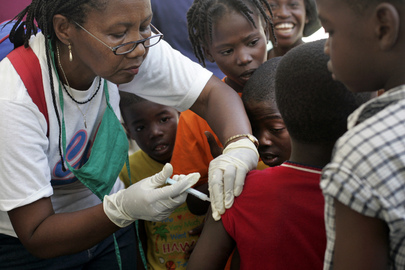
Image Source: https://www.unoosa.org/oosa/de/ourwork/space4sdgs/sdg3.html
Goal 3: Good Health and Well-being – Ensure healthy lives and promote well-being for all at all ages
SDG Goal 3, “Good Health and Well-being,” aims to ensure healthy lives and promote well-being for all at all ages. The goal focuses on reducing maternal and infant mortality rates, ending the epidemics of AIDS, tuberculosis, malaria, and neglected tropical diseases, and combating hepatitis, water-borne diseases, and other communicable diseases. It also seeks to address non-communicable diseases, mental health, substance abuse, and traffic accidents. Additionally, the goal emphasizes the importance of universal health coverage, including financial risk protection, access to quality essential health-care services, and access to safe, effective, quality, and affordable essential medicines and vaccines for all.
Target 3.1:
By 2030, reduce the global maternal mortality ratio to less than 70 per 100,000 live births.
- Indicator 3.1.1: Maternal mortality ratio.
- Indicator 3.1.2: Proportion of births attended by skilled health personnel.
Target 3.2:
By 2030, end preventable deaths of newborns and children under 5 years of age, with all countries aiming to reduce neonatal mortality to at least as low as 12 per 1,000 live births and under-5 mortality to at least as low as 25 per 1,000 live births.
- Indicator 3.2.1: Under-5 mortality rate.
- Indicator 3.2.2: Neonatal mortality rate.
Target 3.3:
By 2030, end the epidemics of AIDS, tuberculosis, malaria, and neglected tropical diseases and combat hepatitis, water-borne diseases, and other communicable diseases.
- Indicator 3.3.1: Number of new HIV infections per 1,000 uninfected population, by sex, age, and key populations.
- Indicator 3.3.2: Tuberculosis incidence per 100,000 population.
- Indicator 3.3.3: Malaria incidence per 1,000 population.
- Indicator 3.3.4: Hepatitis B incidence per 100,000 population.
- Indicator 3.3.5: Number of people requiring interventions against neglected tropical diseases.
Target 3.4:
By 2030, reduce by one third premature mortality from non-communicable diseases through prevention and treatment and promote mental health and well-being.
- Indicator 3.4.1: Mortality rate attributed to cardiovascular disease, cancer, diabetes, or chronic respiratory disease.
- Indicator 3.4.2: Suicide mortality rate.
Target 3.5:
Strengthen the prevention and treatment of substance abuse, including narcotic drug abuse and harmful use of alcohol.
- Indicator 3.5.1: Coverage of treatment interventions (pharmacological, psychosocial, and rehabilitation and aftercare services) for substance use disorders.
- Indicator 3.5.2: Harmful use of alcohol, defined according to the national context as alcohol per capita (aged 15 years and older) consumption within a calendar year in liters of pure alcohol.
Target 3.6:
By 2020, halve the number of global deaths and injuries from road traffic accidents.
- Indicator 3.6.1: Death rate due to road traffic injuries.
Target 3.7:
By 2030, ensure universal access to sexual and reproductive health-care services, including for family planning, information and education, and the integration of reproductive health into national strategies and programs.
- Indicator 3.7.1: Proportion of women of reproductive age (aged 15-49 years) who have their need for family planning satisfied with modern methods.
- Indicator 3.7.2: Adolescent birth rate (aged 10-14 years; aged 15-19 years) per 1,000 women in that age group.
Target 3.8:
Achieve universal health coverage, including financial risk protection, access to quality essential health-care services, and access to safe, effective, quality, and affordable essential medicines and vaccines for all.
- Indicator 3.8.1: Coverage of essential health services (defined as the average coverage of essential services based on tracer interventions that include reproductive, maternal, newborn, and child health, infectious diseases, non-communicable diseases, and service capacity and access, among the general and the most disadvantaged population).
- Indicator 3.8.2: Proportion of population with large household expenditures on health as a share of total household expenditure or income.
Target 3.9:
By 2030, substantially reduce the number of deaths and illnesses from hazardous chemicals and air, water, and soil pollution and contamination.
- Indicator 3.9.1: Mortality rate attributed to household and ambient air pollution.
- Indicator 3.9.2: Mortality rate attributed to unsafe water, unsafe sanitation, and lack of hygiene (exposure to unsafe Water, Sanitation, and Hygiene for All (WASH) services).
- Indicator 3.9.3: Mortality rate attributed to unintentional poisoning.
Target 3.a:
Strengthen the implementation of the World Health Organization Framework Convention on Tobacco Control in all countries, as appropriate.
- Indicator 3.a.1: Age-standardized prevalence of current tobacco use among persons aged 15 years and older.
Target 3.b:
Support the research and development of vaccines and medicines for the communicable and non-communicable diseases that primarily affect developing countries, provide access to affordable essential medicines and vaccines, in accordance with the Doha Declaration on the TRIPS Agreement and Public Health, which affirms the right of developing countries to use to the full the provisions in the Agreement on Trade-Related Aspects of Intellectual Property Rights regarding flexibilities to protect public health, and, in particular, provide access to medicines for all.
- Indicator 3.b.1: Proportion of the target population covered by all vaccines included in their national program.
- Indicator 3.b.2: Total net official development assistance to medical research and basic health sectors.
- Indicator 3.b.3: Proportion of health facilities that have a core set of relevant essential medicines available and affordable on a sustainable basis.
Target 3.c:
Substantially increase health financing and the recruitment, development, training, and retention of the health workforce in developing countries, especially in least developed countries and small island developing States.
- Indicator 3.c.1: Health worker density and distribution.
Target 3.d:
Strengthen the capacity of all countries, in particular developing countries, for early warning, risk reduction, and management of national and global health risks.
- Indicator 3.d.1: International Health Regulations (IHR) capacity and health emergency preparedness.
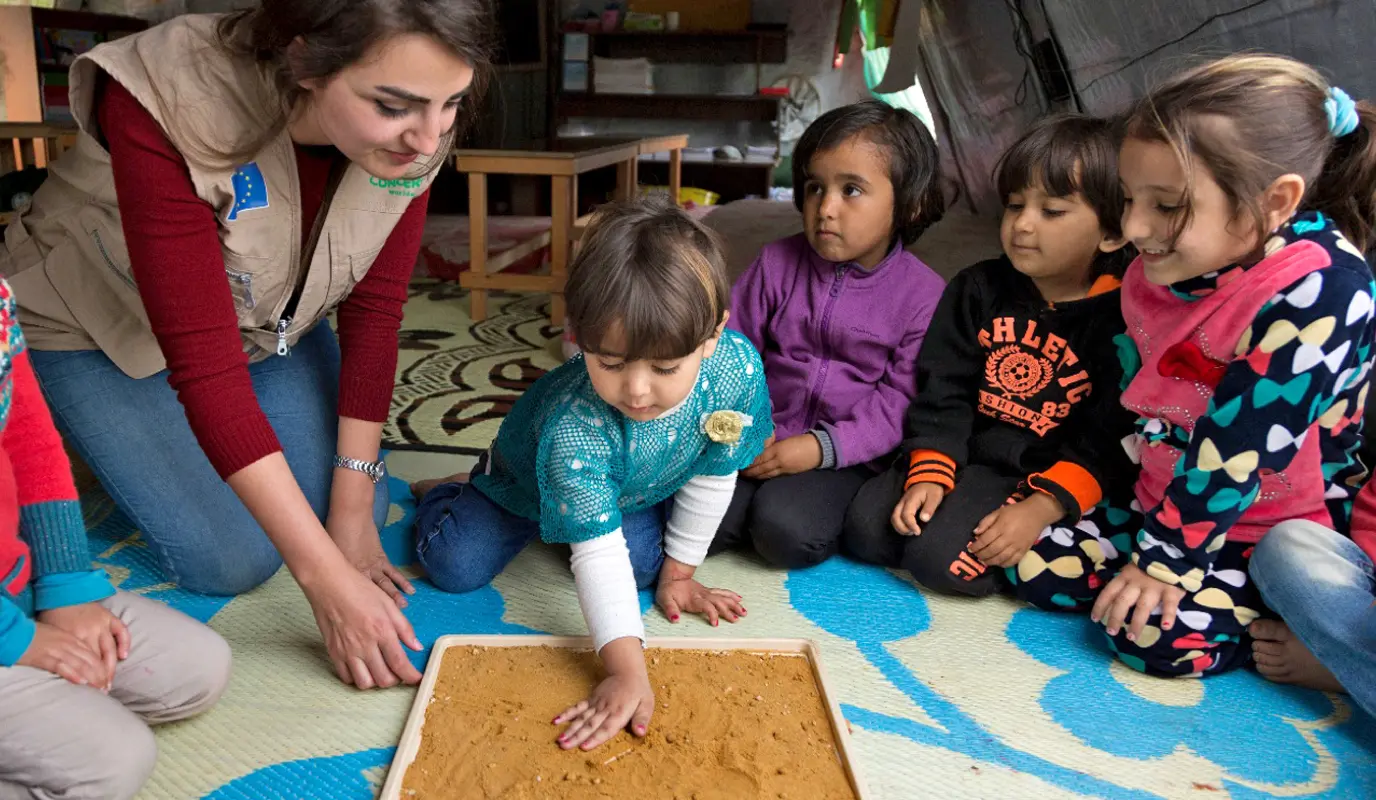
Image Source: https://concernusa.org/news/quality-education-explained/
Goal 4: Quality Education – Ensure inclusive and equitable quality education and promote lifelong learning opportunities for all
SDG Goal 4, “Quality Education,” aims to ensure inclusive and equitable quality education and promote lifelong learning opportunities for all. The goal focuses on providing free, equitable, and quality primary and secondary education to all children and ensuring equal access to affordable and quality technical, vocational, and tertiary education. It also emphasizes the importance of building and upgrading education facilities that are child-, disability-, and gender-sensitive and provide safe, non-violent, inclusive, and effective learning environments for all.
Target 4.1:
By 2030, ensure that all girls and boys complete free, equitable, and quality primary and secondary education leading to relevant and effective learning outcomes.
- Indicator 4.1.1: Proportion of children and young people (a) in grades 2/3; (b) at the end of primary; and (c) at the end of lower secondary achieving at least a minimum proficiency level in (i) reading and (ii) mathematics, by sex.
Target 4.2:
By 2030, ensure that all girls and boys have access to quality early childhood development, care, and pre-primary education so that they are ready for primary education.
- Indicator 4.2.1: Proportion of children under 5 years of age who are developmentally on track in health, learning, and psychosocial well-being, by sex.
- Indicator 4.2.2: Participation rate in organized learning (one year before the official primary entry age), by sex.
Target 4.3:
By 2030, ensure equal access for all women and men to affordable and quality technical, vocational, and tertiary education, including university.
- Indicator 4.3.1: Participation rate of youth and adults in formal and non-formal education and training in the previous 12 months, by sex.
Target 4.4:
By 2030, substantially increase the number of youth and adults who have relevant skills, including technical and vocational skills, for employment, decent jobs, and entrepreneurship.
- Indicator 4.4.1: Proportion of youth and adults with information and communications technology (ICT) skills, by type of skill.
Target 4.5:
By 2030, eliminate gender disparities in education and ensure equal access to all levels of education and vocational training for the vulnerable, including persons with disabilities, indigenous peoples, and children in vulnerable situations.
- Indicator 4.5.1: Parity indices (female/male, urban/rural, bottom/top wealth quintile, and others such as disability status, indigenous peoples, and conflict-affected, as data become available) for all education indicators on this list that can be disaggregated.
Target 4.6:
By 2030, ensure that all youth and a substantial proportion of adults, both men and women, achieve literacy and numeracy.
- Indicator 4.6.1: Proportion of population in a given age group achieving at least a fixed level of proficiency in functional literacy and numeracy skills, by sex.
Target 4.7:
By 2030, ensure that all learners acquire the knowledge and skills needed to promote sustainable development, including among others through education for sustainable development and sustainable lifestyles, human rights, gender equality, promotion of a culture of peace and non-violence, global citizenship, and appreciation of cultural diversity and of culture’s contribution to sustainable development.
- Indicator 4.7.1: Extent to which (i) global citizenship education and (ii) education for sustainable development, including gender equality and human rights, are mainstreamed at all levels in (a) national education policies, (b) curricula, (c) teacher education, and (d) student assessment.
Target 4.a:
Build and upgrade education facilities that are child-, disability-, and gender-sensitive and provide safe, non-violent, inclusive, and effective learning environments for all.
- Indicator 4.a.1: Proportion of schools with access to (a) electricity; (b) the Internet for pedagogical purposes; (c) computers for pedagogical purposes; (d) adapted infrastructure and materials for students with disabilities; (e) basic drinking water; (f) single-sex basic sanitation facilities; and (g) basic handwashing facilities (as per the WASH indicator definitions).
Target 4.b:
By 2020, substantially expand globally the number of scholarships available to developing countries, in particular least developed countries, small island developing States, and African countries, for enrollment in higher education, including vocational training and information and communications technology, technical, engineering, and scientific programs, in developed countries and other developing countries.
- Indicator 4.b.1: Volume of official development assistance flows for scholarships by sector and type of study.
Target 4.c:
By 2030, substantially increase the supply of qualified teachers, including through international cooperation for teacher training in developing countries, especially least developed countries and small island developing States.
- Indicator 4.c.1: Proportion of teachers in (i) pre-primary; (ii) primary; (iii) lower secondary; and (iv) upper secondary education who have received at least the minimum organized teacher training (e.g., pedagogical training) pre-service or in-service required for teaching at the relevant level in a given country.

Image Source: https://www.npr.org/2023/03/08/1161902940/international-womens-day-gender-equality-life-expectancy
Goal 5: Gender Equality – Achieve gender equality and empower all women and girls
SDG Goal 5, “Gender Equality,” aims to achieve gender equality and empower all women and girls. The goal seeks to end all forms of discrimination against all women and girls everywhere, eliminate all forms of violence against all women and girls in the public and private spheres, and eliminate all harmful practices, such as child, early, and forced marriage and female genital mutilation. It also emphasizes the importance of recognizing and valuing unpaid care and domestic work and ensuring women’s full and effective participation and equal opportunities for leadership at all levels of decision-making in political, economic, and public life.
Target 5.1:
End all forms of discrimination against all women and girls everywhere.
- Indicator 5.1.1: Whether or not legal frameworks are in place to promote, enforce, and monitor equality and non-discrimination on the basis of sex.
Target 5.2:
Eliminate all forms of violence against all women and girls in the public and private spheres, including trafficking and sexual and other types of exploitation.
- Indicator 5.2.1: Proportion of ever-partnered women and girls aged 15 years and older subjected to physical, sexual, or psychological violence by a current or former intimate partner in the previous 12 months, by form of violence and by age.
- Indicator 5.2.2: Proportion of women and girls aged 15 years and older subjected to sexual violence by persons other than an intimate partner in the previous 12 months, by age, and place of occurrence.
Target 5.3:
Eliminate all harmful practices, such as child, early, and forced marriage and female genital mutilation.
- Indicator 5.3.1: Proportion of women aged 20-24 years who were married or in a union before age 15 and before age 18.
- Indicator 5.3.2: Proportion of girls and women aged 15-49 years who have undergone female genital mutilation/cutting, by age.
Target 5.4:
Recognize and value unpaid care and domestic work through the provision of public services, infrastructure, and social protection policies, and the promotion of shared responsibility within the household and the family as nationally appropriate.
- Indicator 5.4.1: Proportion of time spent on unpaid domestic and care work, by sex, age, and location.
Target 5.5:
Ensure women’s full and effective participation and equal opportunities for leadership at all levels of decision-making in political, economic, and public life.
- Indicator 5.5.1: Proportion of seats held by women in (a) national parliaments and (b) local governments.
- Indicator 5.5.2: Proportion of women in managerial positions.
Target 5.6:
Ensure universal access to sexual and reproductive health and reproductive rights as agreed in accordance with the Programme of Action of the International Conference on Population and Development and the Beijing Platform for Action and the outcome documents of their review conferences.
- Indicator 5.6.1: Proportion of women aged 15-49 years who make their own informed decisions regarding sexual relations, contraceptive use, and reproductive health care.
- Indicator 5.6.2: Number of countries with laws and regulations that guarantee women aged 15-49 years access to sexual and reproductive health care, information, and education.
Target 5.a:
Undertake reforms to give women equal rights to economic resources, as well as access to ownership and control over land and other forms of property, financial services, inheritance, and natural resources, in accordance with national laws.
- Indicator 5.a.1: (a) Proportion of total agricultural population with ownership or secure rights over agricultural land, by sex; and (b) share of women among owners or rights-bearers of agricultural land, by type of tenure.
- Indicator 5.a.2: Proportion of countries where the legal framework (including customary law) guarantees women’s equal rights to land ownership and/or control.
Target 5.b:
Enhance the use of enabling technology, in particular information and communications technology, to promote the empowerment of women.
- Indicator 5.b.1: Proportion of individuals who own a mobile telephone, by sex.
Target 5.c:
Adopt and strengthen sound policies and enforceable legislation for the promotion of gender equality and the empowerment of all women and girls at all levels.
- Indicator 5.c.1: Proportion of countries with systems to track and make public allocations for gender equality and women’s empowerment.

Image Source: https://rotaryserviceblog.org/2022/03/01/ideas-for-supporting-clean-water-and-sanitation/
Goal 6: Clean Water and Sanitation – Ensure availability and sustainable management of water and sanitation for all
SDG Goal 6, “Clean Water and Sanitation,” aims to ensure availability and sustainable management of water and sanitation for all. The goal focuses on achieving universal and equitable access to safe and affordable drinking water for all, as well as adequate and equitable sanitation and hygiene for all, while paying special attention to the needs of women and girls and those in vulnerable situations. It also emphasizes the importance of improving water quality by reducing pollution, eliminating dumping, and minimizing the release of hazardous chemicals and materials, halving the proportion of untreated wastewater, and substantially increasing water-use efficiency across all sectors.
Target 6.1:
By 2030, achieve universal and equitable access to safe and affordable drinking water for all.
- Indicator 6.1.1: Proportion of population using safely managed drinking water services.
Target 6.2:
By 2030, achieve access to adequate and equitable sanitation and hygiene for all and end open defecation, paying special attention to the needs of women and girls and those in vulnerable situations.
- Indicator 6.2.1: Proportion of population using safely managed sanitation services, including a hand-washing facility with soap and water.
Target 6.3:
By 2030, improve water quality by reducing pollution, eliminating dumping, and minimizing the release of hazardous chemicals and materials, halving the proportion of untreated wastewater, and substantially increasing water recycling and safe reuse globally.
- Indicator 6.3.1: Proportion of wastewater safely treated.
- Indicator 6.3.2: Proportion of bodies of water with good ambient water quality.
Target 6.4:
By 2030, substantially increase water-use efficiency across all sectors and ensure sustainable withdrawals and supply of freshwater to address water scarcity and substantially reduce the number of people suffering from water scarcity.
- Indicator 6.4.1: Change in water-use efficiency over time.
- Indicator 6.4.2: Level of water stress: freshwater withdrawal as a proportion of available freshwater resources.
Target 6.5:
By 2030, implement integrated water resources management at all levels, including through transboundary cooperation as appropriate.
- Indicator 6.5.1: Degree of integrated water resources management implementation (0-100).
- Indicator 6.5.2: Proportion of transboundary basin area with an operational arrangement for water cooperation.
Target 6.6:
By 2020, protect and restore water-related ecosystems, including mountains, forests, wetlands, rivers, aquifers, and lakes.
- Indicator 6.6.1: Change in the extent of water-related ecosystems over time.
Target 6.a:
By 2030, expand international cooperation and capacity-building support to developing countries in water- and sanitation-related activities and programs, including water harvesting, desalination, water efficiency, wastewater treatment, recycling, and reuse technologies.
- Indicator 6.a.1: Amount of water- and sanitation-related official development assistance that is part of a government-coordinated spending plan.
Target 6.b:
Support and strengthen the participation of local communities in improving water and sanitation management.
- Indicator 6.b.1: Proportion of local administrative units with established and operational policies and procedures for participation of local communities in water and sanitation management.
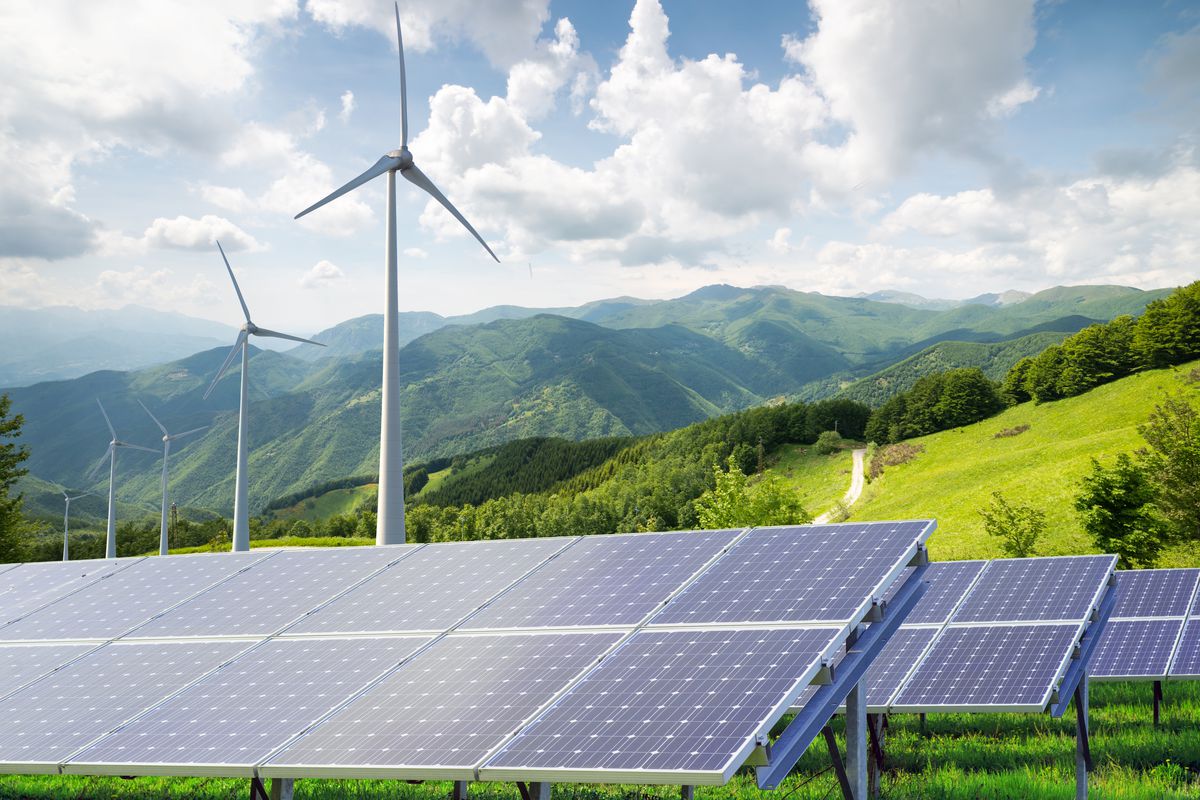
Image Source: https://www.go-green.ae/saudi-elenex-2019-to-highlight-promising-renewable-and-clean-energy-sector-opportunities/
Goal 7: Affordable and Clean Energy – Ensure access to affordable, reliable, sustainable, and modern energy for all
SDG Goal 7, “Affordable and Clean Energy,” aims to ensure access to affordable, reliable, sustainable, and modern energy for all. The goal focuses on ensuring universal access to affordable, reliable, and modern energy services by increasing the share of renewable energy in the global energy mix and improving energy efficiency. It also emphasizes the importance of enhancing international cooperation to facilitate access to clean energy research and technology, including renewable energy, energy efficiency, and advanced and cleaner fossil-fuel technology, and promoting investment in energy infrastructure and clean energy technology.
Target 7.1:
By 2030, ensure universal access to affordable, reliable, and modern energy services.
- Indicator 7.1.1: Proportion of population with access to electricity.
- Indicator 7.1.2: Proportion of population with primary reliance on clean cooking fuels and technology.
Target 7.2:
By 2030, increase substantially the share of renewable energy in the global energy mix.
- Indicator 7.2.1: Renewable energy share in the total final energy consumption.
Target 7.3:
By 2030, double the global rate of improvement in energy efficiency.
- Indicator 7.3.1: Energy intensity measured in terms of primary energy and GDP.
Target 7.a:
By 2030, enhance international cooperation to facilitate access to clean energy research and technology, including renewable energy, energy efficiency, and advanced and cleaner fossil-fuel technology, and promote investment in energy infrastructure and clean energy technology.
- Indicator 7.a.1: International financial flows to developing countries in support of clean energy research and development and renewable energy production, including in hybrid systems.
Target 7.b:
By 2030, expand infrastructure and upgrade technology for supplying modern and sustainable energy services for all in developing countries, in particular least developed countries, small island developing States, and landlocked developing countries, in accordance with their respective programs of support.
- Indicator 7.b.1: Installed renewable energy-generating capacity in developing countries (in watts per capita).
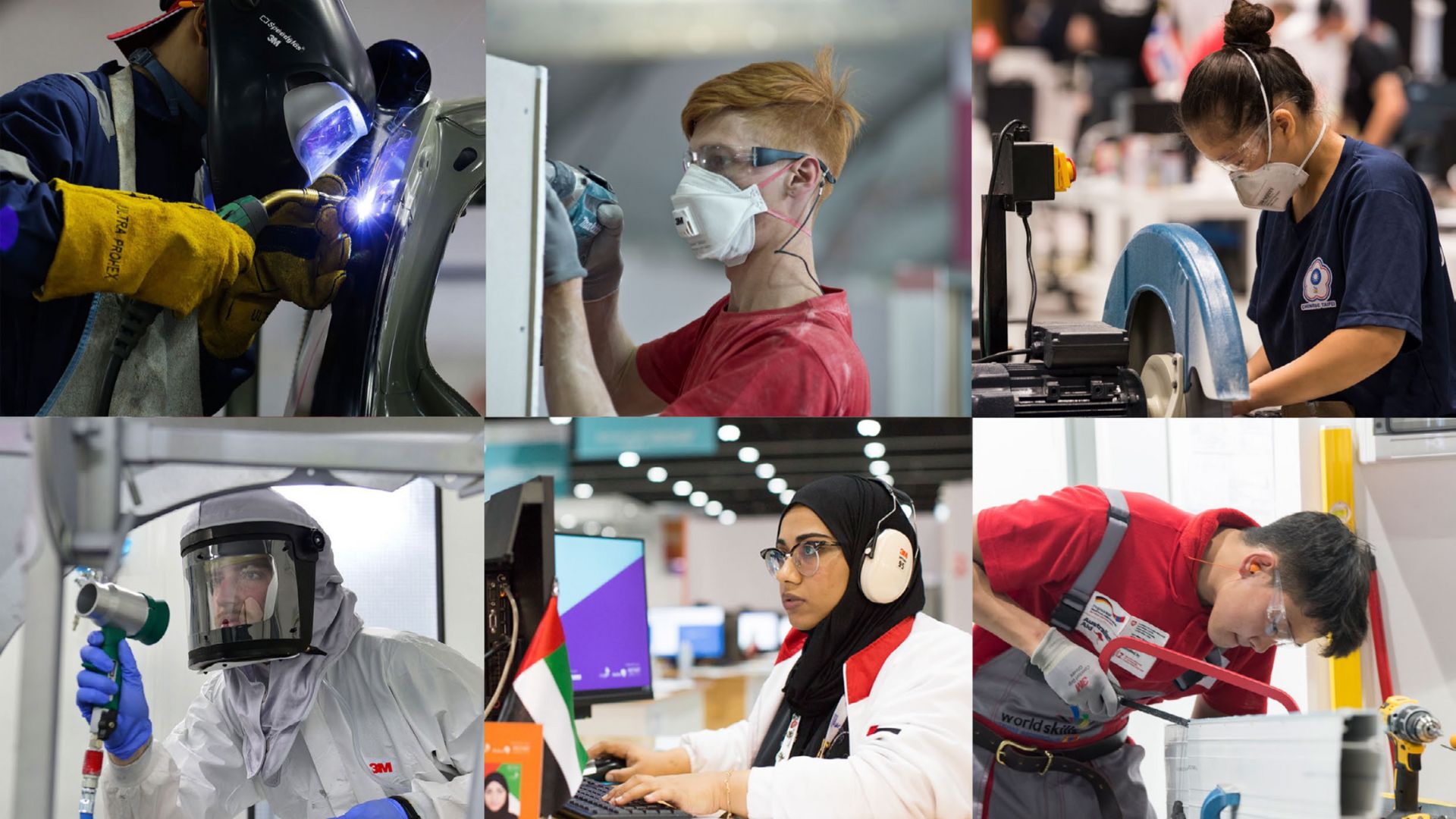
Image Source: https://globescan.com/2019/07/16/sdg-goal-8-leadership-forum-report/
Goal 8: Decent Work and Economic Growth – Promote sustained, inclusive, and sustainable economic growth, full and productive employment, and decent work for all
SDG Goal 8, “Decent Work and Economic Growth,” aims to promote sustained, inclusive, and sustainable economic growth, full and productive employment, and decent work for all. The goal focuses on achieving higher levels of economic productivity through diversification, technological upgrading, and innovation, including through a focus on high-value added and labor-intensive sectors. It also emphasizes the importance of promoting policies that support productive activities, decent job creation, entrepreneurship, creativity, and innovation, and encouraging the formalization and growth of micro-, small-, and medium-sized enterprises, including through access to financial services.
Target 8.1:
Sustain per capita economic growth in accordance with national circumstances and, in particular, at least 7 percent gross domestic product growth per annum in the least developed countries.
- Indicator 8.1.1: Annual growth rate of real GDP per capita.
Target 8.2:
Achieve higher levels of economic productivity through diversification, technological upgrading, and innovation, including through a focus on high-value-added and labor-intensive sectors.
- Indicator 8.2.1: Annual growth rate of real GDP per employed person.
Target 8.3:
Promote development-oriented policies that support productive activities, decent job creation, entrepreneurship, creativity, and innovation, and encourage the formalization and growth of micro-, small-, and medium-sized enterprises, including through access to financial services.
- Indicator 8.3.1: Proportion of informal employment in non-agriculture employment, by sex.
Target 8.4:
Improve progressively, through 2030, global resource efficiency in consumption and production, and endeavor to decouple economic growth from environmental degradation, in accordance with the 10-year framework of programs on sustainable consumption and production, with developed countries taking the lead.
- Indicator 8.4.1: Material footprint, material footprint per capita, and material footprint per GDP.
- Indicator 8.4.2: Domestic material consumption, domestic material consumption per capita, and domestic material consumption per GDP.
Target 8.5:
By 2030, achieve full and productive employment and decent work for all women and men, including for young people and persons with disabilities, and equal pay for work of equal value.
- Indicator 8.5.1: Average hourly earnings of employees, by sex, age, occupation, and persons with disabilities.
- Indicator 8.5.2: Unemployment rate, by sex, age, and persons with disabilities.
Target 8.6:
By 2020, substantially reduce the proportion of youth not in employment, education, or training.
- Indicator 8.6.1: Proportion of youth (aged 15-24 years) not in education, employment, or training.
Target 8.7:
Take immediate and effective measures to eradicate forced labor, end modern slavery and human trafficking, and secure the prohibition and elimination of the worst forms of child labor, including recruitment and use of child soldiers, and by 2025 end child labor in all its forms.
- Indicator 8.7.1: Proportion and number of children aged 5-17 years engaged in child labor, by sex and age.
Target 8.8:
Protect labor rights and promote safe and secure working environments for all workers, including migrant workers, in particular women migrants, and those in precarious employment.
- Indicator 8.8.1: Frequency rates of fatal and non-fatal occupational injuries, by sex and migrant status.
- Indicator 8.8.2: Level of national compliance with labor rights (freedom of association and collective bargaining) based on International Labour Organization (ILO) textual sources and national legislation, by sex and migrant status.
Target 8.9:
By 2030, devise and implement policies to promote sustainable tourism that creates jobs and promotes local culture and products.
- Indicator 8.9.1: Tourism direct GDP as a proportion of total GDP and in growth rate.
- Indicator 8.9.2: Proportion of jobs in sustainable tourism industries out of total tourism jobs.
Target 8.10:
Strengthen the capacity of domestic financial institutions to encourage and expand access to banking, insurance, and financial services for all.
- Indicator 8.10.1: (a) Number of commercial bank branches per 100,000 adults and (b) number of automated teller machines (ATMs) per 100,000 adults.
- Indicator 8.10.2: Proportion of adults (15 years and older) with an account at a bank or other financial institution or with a mobile-money-service provider.
Target 8.a:
Increase Aid for Trade support for developing countries, in particular least developed countries, including through the Enhanced Integrated Framework for Trade-Related Technical Assistance to Least Developed Countries.
- Indicator 8.a.1: Aid for Trade commitments and disbursements.
Target 8.b:
By 2020, develop and operationalize a global strategy for youth employment and implement the Global Jobs Pact of the International Labour Organization.
- Indicator 8.b.1: Existence of a developed and operationalized national strategy for youth employment, as a distinct strategy or as part of a national employment strategy.

Image Source: https://www.claconnect.com/en/resources/articles/2019/construction-industry-innovation-data-analytics-and-technology-tools
Goal 9: Industry, Innovation, and Infrastructure – Build resilient infrastructure, promote inclusive and sustainable industrialization, and foster innovation
SDG Goal 9, “Industry, Innovation, and Infrastructure,” aims to build resilient infrastructure, promote inclusive and sustainable industrialization, and foster innovation. The goal focuses on developing quality, reliable, sustainable, and resilient infrastructure to support economic development and human well-being, with a focus on affordable and equitable access for all. It also emphasizes the importance of promoting inclusive and sustainable industrialization and significantly raising industry’s share of employment and gross domestic product, in line with national circumstances, and doubling its share in least developed countries. Furthermore, it seeks to enhance scientific research, upgrade technological capabilities, and encourage innovation in all countries.
Target 9.1:
Develop quality, reliable, sustainable, and resilient infrastructure, including regional and transborder infrastructure, to support economic development and human well-being, with a focus on affordable and equitable access for all.
- Indicator 9.1.1: Proportion of the rural population who live within 2 km of an all-season road.
- Indicator 9.1.2: Passenger and freight volumes, by mode of transport.
Target 9.2:
Promote inclusive and sustainable industrialization and, by 2030, significantly raise industry’s share of employment and gross domestic product, in line with national circumstances, and double its share in least developed countries.
- Indicator 9.2.1: Manufacturing value added as a proportion of GDP and per capita.
- Indicator 9.2.2: Manufacturing employment as a proportion of total employment.
Target 9.3:
Increase the access of small-scale industrial and other enterprises, in particular in developing countries, to financial services, including affordable credit, and their integration into value chains and markets.
- Indicator 9.3.1: Proportion of small-scale industries in total industry value added.
- Indicator 9.3.2: Proportion of small-scale industries with a loan or line of credit.
Target 9.4:
By 2030, upgrade infrastructure and retrofit industries to make them sustainable, with increased resource-use efficiency and greater adoption of clean and environmentally sound technologies and industrial processes, with all countries taking action in accordance with their respective capabilities.
- Indicator 9.4.1: CO2 emission per unit of value added.
Target 9.5:
Enhance scientific research, upgrade the technological capabilities of industrial sectors in all countries, in particular developing countries, including, by 2030, encouraging innovation and substantially increasing the number of research and development workers per 1 million people and public and private research and development spending.
- Indicator 9.5.1: Research and development expenditure as a proportion of GDP.
- Indicator 9.5.2: Researchers (in full-time equivalent) per million inhabitants.
Target 9.a:
Facilitate sustainable and resilient infrastructure development in developing countries through enhanced financial, technological, and technical support to African countries, least developed countries, landlocked developing countries, and small island developing States.
- Indicator 9.a.1: Total official international support (official development assistance plus other official flows) to infrastructure.
Target 9.b:
Support domestic technology development, research, and innovation in developing countries, including by ensuring a conducive policy environment for, inter alia, industrial diversification and value addition to commodities.
- Indicator 9.b.1: Proportion of medium and high-tech industry value added in total value added.
Target 9.c:
Significantly increase access to information and communications technology and strive to provide universal and affordable access to the Internet in least developed countries by 2020.
- Indicator 9.c.1: Proportion of population covered by a mobile network, by technology.
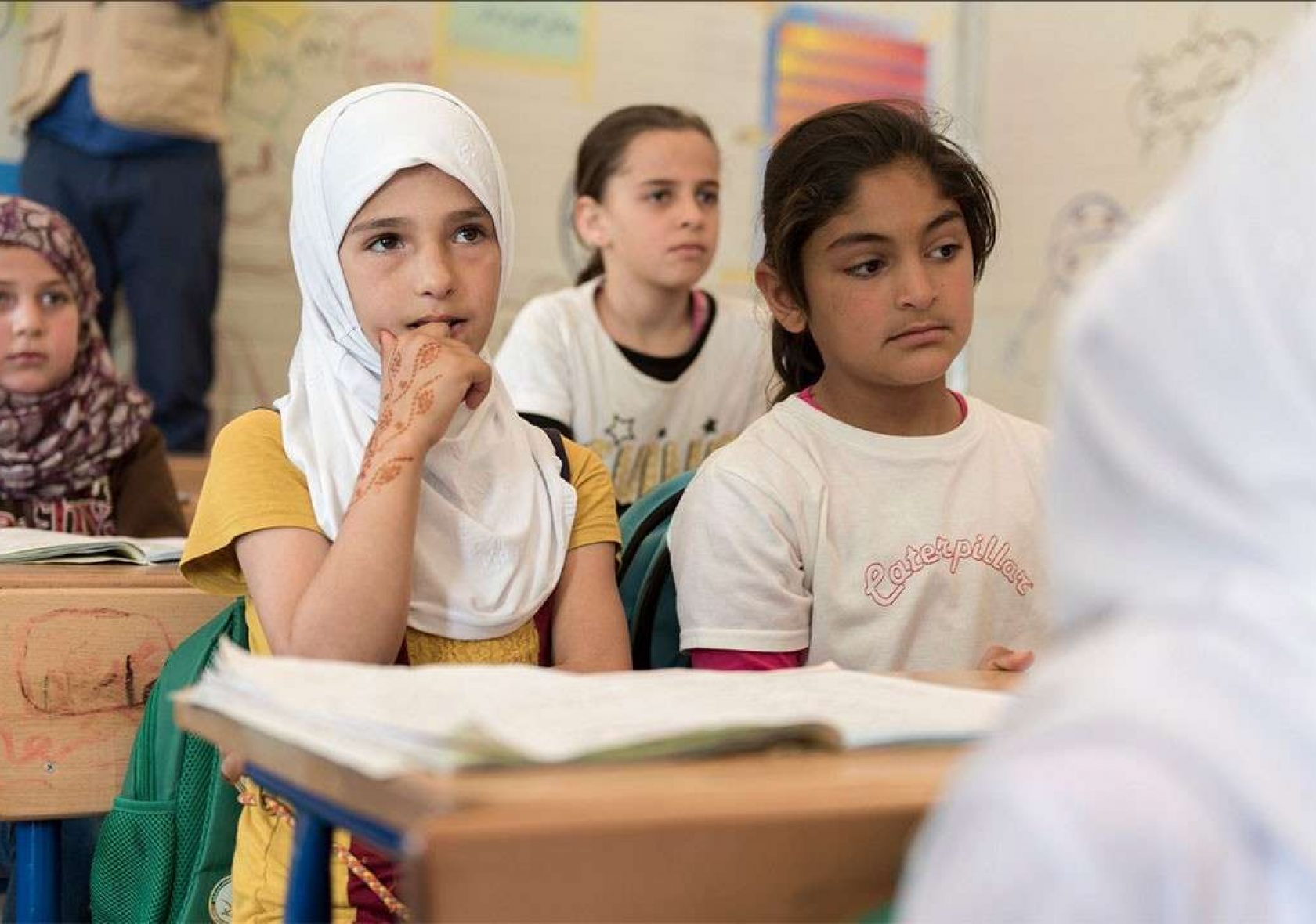
Image Source: https://alliance2030.ca/sdg/reduced-inequalities/
Goal 10: Reduced Inequalities – Reduce inequality within and among countries
SDG Goal 10, “Reduced Inequalities,” aims to reduce inequality within and among countries. The goal focuses on progressively achieving and sustaining income growth of the bottom 40 percent of the population at a rate higher than the national average. It also emphasizes the importance of empowering and promoting the social, economic, and political inclusion of all, irrespective of age, sex, disability, race, ethnicity, origin, religion, or economic or other status. The goal seeks to ensure equal opportunity and reduce inequalities of outcome, including by eliminating discriminatory laws, policies, and practices, and promoting appropriate legislation, policies, and action in this regard.
Target 10.1:
By 2030, progressively achieve and sustain income growth of the bottom 40 percent of the population at a rate higher than the national average.
- Indicator 10.1.1: Growth rates of household expenditure or income per capita among the bottom 40 percent of the population and the total population.
Target 10.2:
By 2030, empower and promote the social, economic, and political inclusion of all, irrespective of age, sex, disability, race, ethnicity, origin, religion, or economic or other status.
- Indicator 10.2.1: Proportion of people living below 50 percent of median income, by sex, age, and persons with disabilities.
Target 10.3:
Ensure equal opportunity and reduce inequalities of outcome, including by eliminating discriminatory laws, policies, and practices and promoting appropriate legislation, policies, and action in this regard.
- Indicator 10.3.1: Proportion of population reporting having personally felt discriminated against or harassed in the previous 12 months on the basis of a ground of discrimination prohibited under international human rights law.
Target 10.4:
Adopt policies, especially fiscal, wage, and social protection policies, and progressively achieve greater equality.
- Indicator 10.4.1: Labor share of GDP, comprising wages and social protection transfers.
Target 10.5:
Improve the regulation and monitoring of global financial markets and institutions and strengthen the implementation of such regulations.
- Indicator 10.5.1: Financial Soundness Indicators.
Target 10.6:
Ensure enhanced representation and voice for developing countries in decision-making in global international economic and financial institutions to deliver more effective, credible, accountable, and legitimate institutions.
- Indicator 10.6.1: Proportion of members and voting rights of developing countries in international organizations.
Target 10.7:
Facilitate orderly, safe, regular, and responsible migration and mobility of people, including through the implementation of planned and well-managed migration policies.
- Indicator 10.7.1: Recruitment cost borne by employee as a proportion of yearly income earned in country of destination.
- Indicator 10.7.2: Number of countries with migration policies to facilitate orderly, safe, regular, and responsible migration and mobility of people.
- Indicator 10.7.3: Number of people who died or disappeared in the process of migration towards an international destination.
- Indicator 10.7.4: Proportion of the population who are refugees, by country of origin.
Target 10.a:
Implement the principle of special and differential treatment for developing countries, in particular least developed countries, in accordance with World Trade Organization agreements.
- Indicator 10.a.1: Proportion of tariff lines applied to imports from least developed countries and developing countries with zero-tariff.
Target 10.b:
Encourage official development assistance and financial flows, including foreign direct investment, to States where the need is greatest, in particular least developed countries, African countries, small island developing States, and landlocked developing countries, in accordance with their national plans and programs.
- Indicator 10.b.1: Total resource flows for development, by recipient and donor countries and type of flow (e.g., official development assistance, foreign direct investment, and other flows).
Target 10.c:
By 2030, reduce to less than 3 percent the transaction costs of migrant remittances and eliminate remittance corridors with costs higher than 5 percent.
- Indicator 10.c.1: Remittance costs as a proportion of the amount remitted.

Image Source: https://www.thezebra.com/resources/home/what-is-a-sustainable-city/
Goal 11: Sustainable Cities and Communities – Make cities and human settlements inclusive, safe, resilient, and sustainable
SDG Goal 11, “Sustainable Cities and Communities,” aims to make cities and human settlements inclusive, safe, resilient, and sustainable. The goal focuses on ensuring access for all to adequate, safe, and affordable housing and basic services, and upgrading slums. It also emphasizes the importance of providing access to safe, affordable, accessible, and sustainable transport systems for all, improving road safety, and expanding public transportation, with special attention to the needs of those in vulnerable situations, women, children, persons with disabilities, and older persons.
Target 11.1:
By 2030, ensure access for all to adequate, safe, and affordable housing and basic services, and upgrade slums.
- Indicator 11.1.1: Proportion of urban population living in slums, informal settlements, or inadequate housing.
Target 11.2:
By 2030, provide access to safe, affordable, accessible, and sustainable transport systems for all, improving road safety, notably by expanding public transport, with special attention to the needs of those in vulnerable situations, women, children, persons with disabilities, and older persons.
- Indicator 11.2.1: Proportion of population that has convenient access to public transport, by sex, age, and persons with disabilities.
Target 11.3:
By 2030, enhance inclusive and sustainable urbanization and capacity for participatory, integrated, and sustainable human settlement planning and management in all countries.
- Indicator 11.3.1: Ratio of land consumption rate to population growth rate.
- Indicator 11.3.2: Proportion of cities with a direct participation structure of civil society in urban planning and management that operate regularly and democratically.
Target 11.4:
Strengthen efforts to protect and safeguard the world’s cultural and natural heritage.
- Indicator 11.4.1: Total expenditure (public and private) per capita spent on the preservation, protection, and conservation of all cultural and natural heritage, by type of heritage (cultural, natural), level of government (national, regional, and local/municipal), type of expenditure (operating expenditure/investment), and type of private funding (donations in kind, private non-profit sector, and sponsorship).
Target 11.5:
By 2030, significantly reduce the number of deaths and the number of people affected and substantially decrease the direct economic losses relative to global gross domestic product caused by disasters, including water-related disasters, with a focus on protecting the poor and people in vulnerable situations.
- Indicator 11.5.1: Number of deaths, missing persons, and directly affected persons attributed to disasters per 100,000 population.
- Indicator 11.5.2: Direct economic loss in relation to global GDP, damage to critical infrastructure, and the number of disruptions to basic services, attributed to disasters.
Target 11.6:
By 2030, reduce the adverse per capita environmental impact of cities, including by paying special attention to air quality and municipal and other waste management.
- Indicator 11.6.1: Proportion of urban solid waste regularly collected and with adequate final discharge out of total urban solid waste generated, by cities.
- Indicator 11.6.2: Annual mean levels of fine particulate matter (e.g., PM2.5 and PM10) in cities (population weighted).
Target 11.7:
By 2030, provide universal access to safe, inclusive, and accessible, green, and public spaces, in particular for women and children, older persons, and persons with disabilities.
- Indicator 11.7.1: Average share of the built-up area of cities that is open space for public use for all, by sex, age, and persons with disabilities.
- Indicator 11.7.2: Proportion of persons victim of physical or sexual harassment, by sex, age, disability status, and place of occurrence, in the previous 12 months.
Target 11.a:
Support positive economic, social, and environmental links between urban, peri-urban, and rural areas by strengthening national and regional development planning.
- Indicator 11.a.1: Number of countries that have national urban policies or regional development plans that (a) respond to population dynamics; (b) ensure balanced territorial development; and (c) increase local fiscal space.
Target 11.b:
By 2020, substantially increase the number of cities and human settlements adopting and implementing integrated policies and plans towards inclusion, resource efficiency, mitigation and adaptation to climate change, resilience to disasters, and develop and implement, in line with the Sendai Framework for Disaster Risk Reduction 2015-2030, holistic disaster risk management at all levels.
- Indicator 11.b.1: Number of countries that adopt and implement national disaster risk reduction strategies in line with the Sendai Framework for Disaster Risk Reduction 2015-2030.
- Indicator 11.b.2: Proportion of local governments that adopt and implement local disaster risk reduction strategies in line with national disaster risk reduction strategies.
Target 11.c:
Support least developed countries, including through financial and technical assistance, in building sustainable and resilient buildings utilizing local materials.
- Indicator 11.c.1: Proportion of financial support to the least developed countries that is allocated to the construction and retrofitting of sustainable, resilient, and resource-efficient buildings utilizing local materials.

Image Source: https://www.repsol.com/en/energy-and-the-future/future-of-the-world/responsible-consumption/index.cshtml
Goal 12: Responsible Consumption and Production – Ensure sustainable consumption and production patterns
SDG Goal 12, “Responsible Consumption and Production,” aims to ensure sustainable consumption and production patterns. The goal focuses on achieving the sustainable management and efficient use of natural resources, as well as halving per capita global food waste at the retail and consumer levels and reducing food losses along production and supply chains. It also emphasizes the importance of reducing waste generation through prevention, reduction, recycling, and reuse, as well as encouraging companies to adopt sustainable practices and integrate sustainability information into their reporting cycle.
Target 12.1:
Implement the 10-year framework of programs on sustainable consumption and production, all countries taking action, with developed countries taking the lead, taking into account the development and capabilities of developing countries.
- Indicator 12.1.1: Number of countries with sustainable consumption and production (SCP) national action plans or SCP mainstreamed as a priority or a target into national policies.
Target 12.2:
By 2030, achieve the sustainable management and efficient use of natural resources.
- Indicator 12.2.1: Material footprint, material footprint per capita, and material footprint per GDP.
- Indicator 12.2.2: Domestic material consumption, domestic material consumption per capita, and domestic material consumption per GDP.
Target 12.3:
By 2030, halve per capita global food waste at the retail and consumer levels and reduce food losses along production and supply chains, including post-harvest losses.
- Indicator 12.3.1: (a) Food loss index and (b) food waste index.
Target 12.4:
By 2020, achieve the environmentally sound management of chemicals and all wastes throughout their life cycle, in accordance with agreed international frameworks, and significantly reduce their release to air, water, and soil in order to minimize their adverse impacts on human health and the environment.
- Indicator 12.4.1: Number of parties to international multilateral environmental agreements on hazardous waste, and other chemicals that meet their commitments and obligations in transmitting information as required by each relevant agreement.
- Indicator 12.4.2: Hazardous waste generated per capita and proportion of hazardous waste treated, by type of treatment.
Target 12.5:
By 2030, substantially reduce waste generation through prevention, reduction, recycling, and reuse.
- Indicator 12.5.1: National recycling rate, tons of material recycled.
Target 12.6:
Encourage companies, especially large and transnational companies, to adopt sustainable practices and to integrate sustainability information into their reporting cycle.
- Indicator 12.6.1: Number of companies publishing sustainability reports.
Target 12.7:
Promote public procurement practices that are sustainable, in accordance with national policies and priorities.
- Indicator 12.7.1: Number of countries implementing sustainable public procurement policies and action plans.
Target 12.8:
By 2030, ensure that people everywhere have the relevant information and awareness for sustainable development and lifestyles in harmony with nature.
- Indicator 12.8.1: Extent to which (i) global citizenship education and (ii) education for sustainable development, including gender equality and human rights, are mainstreamed at all levels in (a) national education policies; (b) curricula; (c) teacher education; and (d) student assessment.
Target 12.a:
Support developing countries to strengthen their scientific and technological capacity to move towards more sustainable patterns of consumption and production.
- Indicator 12.a.1: Installed renewable energy-generating capacity in developing countries (in watts per capita).
Target 12.b:
Develop and implement tools to monitor sustainable development impacts for sustainable tourism that creates jobs and promotes local culture and products.
- Indicator 12.b.1: Number of sustainable tourism strategies or policies and implemented action plans with agreed monitoring and evaluation tools.
Target 12.c:
Rationalize inefficient fossil-fuel subsidies that encourage wasteful consumption by removing market distortions, in accordance with national circumstances, including by restructuring taxation and phasing out those harmful subsidies, where they exist, to reflect their environmental impacts, taking fully into account the specific needs and conditions of developing countries and minimizing the possible adverse impacts on their development in a manner that protects the poor and the affected communities.
- Indicator 12.c.1: Amount of fossil-fuel subsidies per unit of GDP (production and consumption) and as a proportion of total national expenditure on fossil fuels.

Image Source: https://development.asia/explainer/how-breakthrough-agenda-enhances-international-cooperation-climate-action
Goal 13: Climate Action – Take urgent action to combat climate change and its impacts
SDG Goal 13, “Climate Action,” aims to take urgent action to combat climate change and its impacts. The goal focuses on strengthening resilience and adaptive capacity to climate-related hazards and natural disasters in all countries, integrating climate change measures into national policies, strategies, and planning, and improving education, awareness-raising, and human and institutional capacity on climate change mitigation, adaptation, impact reduction, and early warning. It also emphasizes the importance of mobilizing financial resources to address the needs of developing countries and promoting mechanisms for raising capacity for effective climate change-related planning and management in least developed countries and small island developing States.
Target 13.1:
Strengthen resilience and adaptive capacity to climate-related hazards and natural disasters in all countries.
- Indicator 13.1.1: Number of deaths, missing persons, and directly affected persons attributed to disasters per 100,000 population.
- Indicator 13.1.2: Number of countries with national and local disaster risk reduction strategies.
- Indicator 13.1.3: Proportion of local governments that adopt and implement local disaster risk reduction strategies in line with national disaster risk reduction strategies.
Target 13.2:
Integrate climate change measures into national policies, strategies, and planning.
- Indicator 13.2.1: Number of countries that have communicated the establishment or operationalization of an integrated policy/strategy/plan which increases their ability to adapt to the adverse impacts of climate change and foster climate resilience and low greenhouse gas emissions development in a manner that does not threaten food production (including a national adaptation plan, nationally determined contribution, national communication, biennial update report, or other).
Target 13.3:
Improve education, awareness-raising, and human and institutional capacity on climate change mitigation, adaptation, impact reduction, and early warning.
- Indicator 13.3.1: Number of countries that have integrated mitigation, adaptation, impact reduction, and early warning into primary, secondary, and tertiary curricula.
- Indicator 13.3.2: Number of countries that have communicated the strengthening of institutional, systemic, and individual capacity-building to implement adaptation, mitigation, and technology transfer, and development actions.
Target 13.a:
Implement the commitment undertaken by developed-country parties to the United Nations Framework Convention on Climate Change to a goal of mobilizing jointly $100 billion annually by 2020 from all sources to address the needs of developing countries in the context of meaningful mitigation actions and transparency on implementation and fully operationalize the Green Climate Fund through its capitalization as soon as possible.
- Indicator 13.a.1: Amounts provided and mobilized in US dollars per year in relation to the continued existing collective mobilization goal of the $100 billion commitment through to 2025.
Target 13.b:
Promote mechanisms for raising capacity for effective climate change-related planning and management in least developed countries and small island developing States, including focusing on women, youth, and local and marginalized communities.
- Indicator 13.b.1: Number of least developed countries and small island developing States that are receiving specialized support, and amount of support, including finance, technology, and capacity-building, for mechanisms for raising capacities for effective climate change-related planning and management, including focusing on women, youth, and local and marginalized communities.
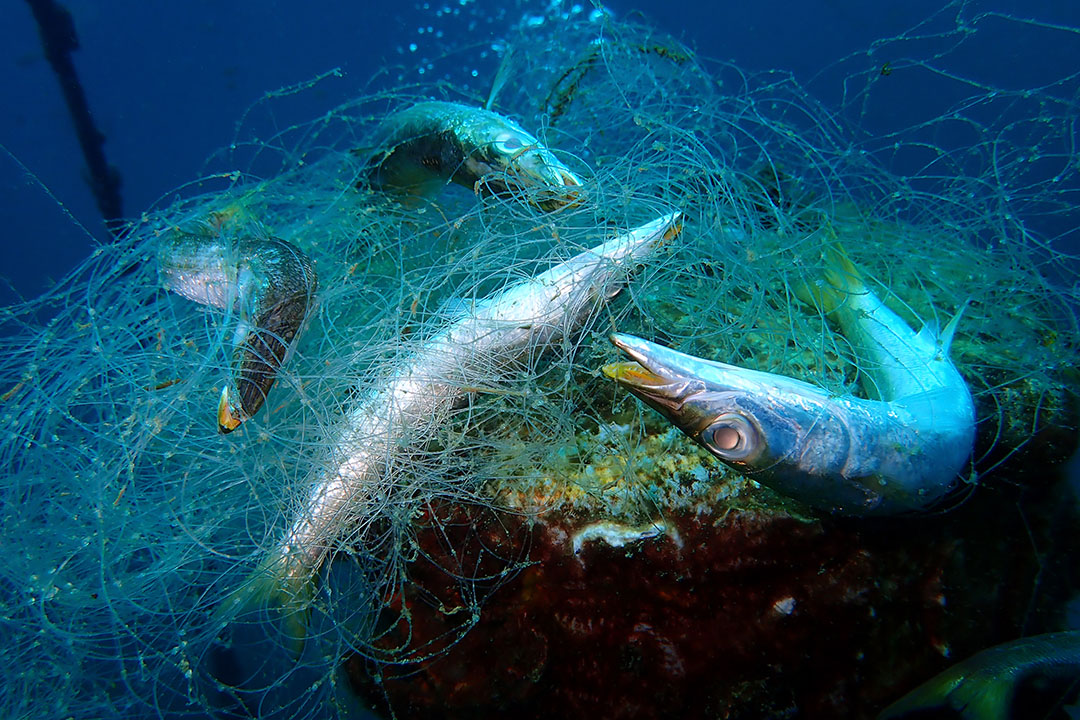
Goal 14: Life Below Water – Conserve and sustainably use the oceans, seas, and marine resources for sustainable development
SDG Goal 14, “Life Below Water,” aims to conserve and sustainably use the oceans, seas, and marine resources for sustainable development. The goal focuses on preventing and significantly reducing marine pollution of all kinds, in particular from land-based activities, including marine debris and nutrient pollution. It also emphasizes the importance of sustainably managing and protecting marine and coastal ecosystems to avoid significant adverse impacts, strengthening the resilience of these ecosystems, and taking action for their restoration in order to achieve healthy and productive oceans.
Target 14.1:
By 2025, prevent and significantly reduce marine pollution of all kinds, in particular from land-based activities, including marine debris and nutrient pollution.
- Indicator 14.1.1: Index of coastal eutrophication and floating plastic debris density.
Target 14.2:
By 2020, sustainably manage and protect marine and coastal ecosystems to avoid significant adverse impacts, including by strengthening their resilience, and take action for their restoration in order to achieve healthy and productive oceans.
- Indicator 14.2.1: Proportion of national exclusive economic zones managed using ecosystem-based approaches.
Target 14.3:
Minimize and address the impacts of ocean acidification, including through enhanced scientific cooperation at all levels.
- Indicator 14.3.1: Average marine acidity (pH) measured at agreed suite of representative sampling stations.
Target 14.4:
By 2020, effectively regulate harvesting and end overfishing, illegal, unreported, and unregulated fishing, and destructive fishing practices and implement science-based management plans in order to restore fish stocks in the shortest time feasible, at least to levels that can produce maximum sustainable yield as determined by their biological characteristics.
- Indicator 14.4.1: Proportion of fish stocks within biologically sustainable levels.
Target 14.5:
By 2020, conserve at least 10 percent of coastal and marine areas, consistent with national and international law and based on the best available scientific information.
- Indicator 14.5.1: Coverage of protected areas in relation to marine areas.
Target 14.6:
By 2020, prohibit certain forms of fisheries subsidies that contribute to overcapacity and overfishing, eliminate subsidies that contribute to illegal, unreported, and unregulated fishing, and refrain from introducing new such subsidies, recognizing that appropriate and effective special and differential treatment for developing and least developed countries should be an integral part of the World Trade Organization fisheries subsidies negotiation.
- Indicator 14.6.1: Degree of implementation of international instruments aiming to combat illegal, unreported, and unregulated fishing.
Target 14.7:
By 2030, increase the economic benefits to small island developing States and least developed countries from the sustainable use of marine resources, including through sustainable management of fisheries, aquaculture, and tourism.
- Indicator 14.7.1: Sustainable fisheries as a proportion of GDP in small island developing States, least developed countries, and all countries.
Target 14.a:
Increase scientific knowledge, develop research capacity, and transfer marine technology in order to improve ocean health and to enhance the contribution of marine biodiversity to the development of developing countries, in particular small island developing States and least developed countries.
- Indicator 14.a.1: Proportion of total research budget allocated to research in the field of marine technology.
Target 14.b:
Provide access for small-scale artisanal fishers to marine resources and markets.
- Indicator 14.b.1: Degree of application of a legal/regulatory/policy/institutional framework which recognizes and protects access rights for small-scale fisheries.
Target 14.c:
Enhance the conservation and sustainable use of oceans and their resources by implementing international law as reflected in the United Nations Convention on the Law of the Sea, which provides the legal framework for the conservation and sustainable use of oceans and their resources, as recalled in paragraph 158 of “The future we want”.
- Indicator 14.c.1: Number of countries making progress in ratifying, accepting, and implementing through legal, policy, and institutional frameworks, ocean-related instruments that implement international law, as reflected in the United Nations Convention on the Law of the Sea, for the conservation and sustainable use of the oceans and their resources.
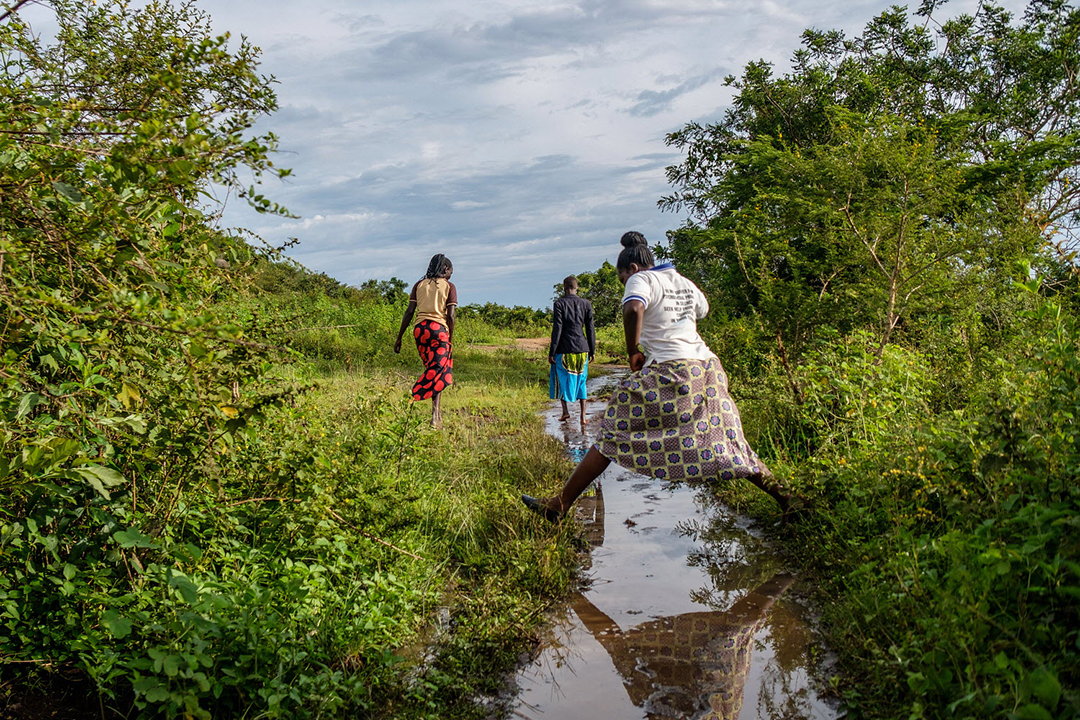
Image Source: https://sdg.iisd.org/commentary/guest-articles/climate-response-for-drylands-must-include-women/
Goal 15: Life on Land – Protect, restore, and promote sustainable use of terrestrial ecosystems, sustainably manage forests, combat desertification, and halt and reverse land degradation and halt biodiversity loss
SDG Goal 15, “Life on Land,” aims to protect, restore, and promote the sustainable use of terrestrial ecosystems, sustainably manage forests, combat desertification, halt and reverse land degradation, and halt biodiversity loss. The goal focuses on conserving, restoring, and ensuring the sustainable use of terrestrial and inland freshwater ecosystems and their services, in particular forests, wetlands, mountains, and drylands. It also emphasizes the importance of promoting the implementation of sustainable management of all types of forests, halting deforestation, and significantly increasing afforestation and reforestation globally.
Target 15.1:
By 2020, ensure the conservation, restoration, and sustainable use of terrestrial and inland freshwater ecosystems and their services, in particular forests, wetlands, mountains, and drylands, in line with obligations under international agreements.
- Indicator 15.1.1: Forest area as a proportion of total land area.
- Indicator 15.1.2: Proportion of important sites for terrestrial and freshwater biodiversity that are covered by protected areas, by ecosystem type.
Target 15.2:
By 2020, promote the implementation of sustainable management of all types of forests, halt deforestation, restore degraded forests, and substantially increase afforestation and reforestation globally.
- Indicator 15.2.1: Progress towards sustainable forest management.
Target 15.3:
By 2030, combat desertification, restore degraded land and soil, including land affected by desertification, drought, and floods, and strive to achieve a land degradation-neutral world.
- Indicator 15.3.1: Proportion of land that is degraded over the total land area.
Target 15.4:
By 2030, ensure the conservation of mountain ecosystems, including their biodiversity, to enhance their capacity to provide benefits that are essential for sustainable development.
- Indicator 15.4.1: Coverage by protected areas of important sites for mountain biodiversity.
- Indicator 15.4.2: Mountain Green Cover Index.
Target 15.5:
Take urgent and significant action to reduce the degradation of natural habitats, halt the loss of biodiversity, and, by 2020, protect and prevent the extinction of threatened species.
- Indicator 15.5.1: Red List Index.
Target 15.6:
Promote fair and equitable sharing of the benefits arising from the utilization of genetic resources and promote appropriate access to such resources, as internationally agreed.
- Indicator 15.6.1: Number of countries that have adopted legislative, administrative, and policy frameworks to ensure fair and equitable sharing of benefits.
Target 15.7:
Take urgent action to end poaching and trafficking of protected species of flora and fauna and address both demand and supply of illegal wildlife products.
- Indicator 15.7.1: Proportion of traded wildlife that was poached or illicitly trafficked.
Target 15.8:
By 2020, introduce measures to prevent the introduction and significantly reduce the impact of invasive alien species on land and water ecosystems and control or eradicate the priority species.
- Indicator 15.8.1: Proportion of countries adopting relevant national legislation and adequately resourcing the prevention or control of invasive alien species.
Target 15.9:
By 2020, integrate ecosystem and biodiversity values into national and local planning, development processes, poverty reduction strategies, and accounts.
- Indicator 15.9.1: (a) Number of countries that have established national targets in accordance with Aichi Biodiversity Target 2 of the Strategic Plan for Biodiversity 2011–2020 in their national biodiversity strategy and action plans and the progress reported towards these targets; and (b) integration of biodiversity into national accounting and reporting systems, defined as implementation of the System of Environmental-Economic Accounting.
Target 15.a:
Mobilize and significantly increase financial resources from all sources to conserve and sustainably use biodiversity and ecosystems.
- Indicator 15.a.1: Official development assistance and public expenditure on conservation and sustainable use of biodiversity and ecosystems.
Target 15.b:
Mobilize significant resources from all sources and at all levels to finance sustainable forest management and provide adequate incentives to developing countries to advance such management, including for conservation and reforestation.
- Indicator 15.b.1: Official development assistance and public expenditure on conservation and sustainable use of biodiversity and ecosystems.
Target 15.c:
Enhance global support for efforts to combat poaching and trafficking of protected species, including by increasing the capacity of local communities to pursue sustainable livelihood opportunities.
- Indicator 15.c.1: Proportion of traded wildlife that was poached or illicitly trafficked.

Image Source: https://ourworld.unu.edu/en/sdg-16-peace-justice-and-strong-institutions
Goal 16: Peace, Justice, and Strong Institutions – Promote peaceful and inclusive societies for sustainable development, provide access to justice for all, and build effective, accountable, and inclusive institutions at all levels
SDG Goal 16, “Peace, Justice, and Strong Institutions,” aims to promote peaceful and inclusive societies for sustainable development, provide access to justice for all, and build effective, accountable, and inclusive institutions at all levels. The goal focuses on significantly reducing all forms of violence and related death rates everywhere, ending abuse, exploitation, trafficking, and all forms of violence against and torture of children. It also emphasizes the importance of promoting the rule of law at the national and international levels, ensuring equal access to justice for all, and reducing corruption and bribery in all their forms.
Target 16.1:
Significantly reduce all forms of violence and related death rates everywhere.
- Indicator 16.1.1: Number of victims of intentional homicide per 100,000 population, by sex and age.
- Indicator 16.1.2: Conflict-related deaths per 100,000 population, by sex, age, and cause.
- Indicator 16.1.3: Proportion of population subjected to physical, psychological, or sexual violence in the previous 12 months.
- Indicator 16.1.4: Proportion of population that feels safe walking alone around the area they live.
Target 16.2:
End abuse, exploitation, trafficking, and all forms of violence against and torture of children.
- Indicator 16.2.1: Proportion of children aged 1-17 years who experienced any physical punishment and/or psychological aggression by caregivers in the past month.
- Indicator 16.2.2: Number of victims of human trafficking per 100,000 population, by sex, age, and form of exploitation.
- Indicator 16.2.3: Proportion of young women and men aged 18-29 years who experienced sexual violence by age 18.
Target 16.3:
Promote the rule of law at the national and international levels and ensure equal access to justice for all.
- Indicator 16.3.1: Proportion of victims of violence in the previous 12 months who reported their victimization to competent authorities or other officially recognized conflict resolution mechanisms.
- Indicator 16.3.2: Unsentenced detainees as a proportion of overall prison population.
Target 16.4:
By 2030, significantly reduce illicit financial and arms flows, strengthen the recovery and return of stolen assets, and combat all forms of organized crime.
- Indicator 16.4.1: Total value of inward and outward illicit financial flows (in current United States dollars).
- Indicator 16.4.2: Proportion of seized, found, or surrendered arms whose illicit origin or context has been traced or established by a competent authority in line with international instruments.
Target 16.5:
Substantially reduce corruption and bribery in all their forms.
- Indicator 16.5.1: Proportion of persons who had at least one contact with a public official and who paid a bribe to a public official or were asked for a bribe by these public officials during the previous 12 months.
- Indicator 16.5.2: Proportion of businesses that had at least one contact with a public official and that paid a bribe to a public official or were asked for a bribe by these public officials during the previous 12 months.
Target 16.6:
Develop effective, accountable, and transparent institutions at all levels.
- Indicator 16.6.1: Primary government expenditures as a proportion of original approved budget, by sector (or by budget codes or similar).
- Indicator 16.6.2: Proportion of the population satisfied with their last experience of public services.
Target 16.7:
Ensure responsive, inclusive, participatory, and representative decision-making at all levels.
- Indicator 16.7.1: Proportions of positions (by sex, age, persons with disabilities, and population groups) in public institutions (national and local legislatures, public service, and judiciary) compared to national distributions.
- Indicator 16.7.2: Proportion of population who believe decision-making is inclusive and responsive, by sex, age, disability, and population group.
Target 16.8:
Broaden and strengthen the participation of developing countries in the institutions of global governance.
- Indicator 16.8.1: Proportion of members and voting rights of developing countries in international organizations.
Target 16.9:
By 2030, provide legal identity for all, including birth registration.
- Indicator 16.9.1: Proportion of children under 5 years of age whose births have been registered with a civil authority, by age.
Target 16.10:
Ensure public access to information and protect fundamental freedoms, in accordance with national legislation and international agreements.
- Indicator 16.10.1: Number of verified cases of killing, kidnapping, enforced disappearance, arbitrary detention, and torture of journalists, associated media personnel, trade unionists, and human rights advocates in the previous 12 months.
- Indicator 16.10.2: Number of countries that adopt and implement constitutional, statutory, and/or policy guarantees for public access to information.
Target 16.a:
Strengthen relevant national institutions, including through international cooperation, for building capacity at all levels, in particular in developing countries, to prevent violence and combat terrorism and crime.
- Indicator 16.a.1: Existence of independent national human rights institutions in compliance with the Paris Principles.
Target 16.b:
Promote and enforce non-discriminatory laws and policies for sustainable development.
- Indicator 16.b.1: Proportion of the population reporting having personally felt discriminated against or harassed in the previous 12 months on the basis of a ground of discrimination prohibited under international human rights law.

Image Source: https://sdgs.un.org/goals/goal17
Goal 17: Partnerships for the Goals – Strengthen the means of implementation and revitalize the Global Partnership for Sustainable Development
SDG Goal 17, “Partnerships for the Goals,” aims to strengthen the means of implementation and revitalize the Global Partnership for Sustainable Development. The goal focuses on enhancing global macroeconomic stability, including through policy coordination and policy coherence. It also emphasizes the importance of increasing the availability of high-quality, timely, and reliable data, building capacity in developing countries, and mobilizing resources to improve domestic capacity for tax and other revenue collection. Additionally, it seeks to promote a universal, rules-based, open, non-discriminatory, and equitable multilateral trading system under the World Trade Organization, and significantly increase the exports of developing countries.
Target 17.1:
Strengthen domestic resource mobilization, including through international support to developing countries, to improve domestic capacity for tax and other revenue collection.
- Indicator 17.1.1: Total government revenue as a proportion of GDP, by source.
- Indicator 17.1.2: Proportion of domestic budget funded by domestic taxes.
Target 17.2:
Developed countries to implement fully their official development assistance commitments, including the commitment by many developed countries to achieve the target of 0.7 percent of ODA/GNI to developing countries and 0.15 to 0.20 percent of ODA/GNI to least developed countries; ODA providers are encouraged to consider setting a target to provide at least 0.20 percent of ODA/GNI to least developed countries.
- Indicator 17.2.1: Net official development assistance, total and to least developed countries, as a proportion of the OECD Development Assistance Committee donors’ gross national income (GNI).
Target 17.3:
Mobilize additional financial resources for developing countries from multiple sources.
- Indicator 17.3.1: Foreign direct investments (FDI), official development assistance, and South-South Cooperation as a proportion of total domestic budget.
- Indicator 17.3.2: Volume of remittances (in United States dollars) as a proportion of total GDP.
Target 17.4:
Assist developing countries in attaining long-term debt sustainability through coordinated policies aimed at fostering debt financing, debt relief, and debt restructuring, as appropriate, and address the external debt of highly indebted poor countries to reduce debt distress.
- Indicator 17.4.1: Debt service as a proportion of exports of goods and services.
Target 17.5:
Adopt and implement investment promotion regimes for least developed countries.
- Indicator 17.5.1: Number of countries that adopt and implement investment promotion regimes for least developed countries.
Target 17.6:
Enhance North-South, South-South, and triangular regional and international cooperation on and access to science, technology, and innovation and enhance knowledge-sharing on mutually agreed terms, including through improved coordination among existing mechanisms, in particular at the United Nations level, and through a global technology facilitation mechanism.
- Indicator 17.6.1: Number of science and/or technology cooperation agreements and programs between countries, by type of cooperation.
- Indicator 17.6.2: Fixed Internet broadband subscriptions per 100 inhabitants, by speed.
Target 17.7:
Promote the development, transfer, dissemination, and diffusion of environmentally sound technologies to developing countries on favorable terms, including on concessional and preferential terms, as mutually agreed.
- Indicator 17.7.1: Total amount of approved funding for developing countries to promote the development, transfer, dissemination, and diffusion of environmentally sound technologies.
Target 17.8:
Fully operationalize the technology bank and science, technology, and innovation capacity-building mechanism for least developed countries by 2017 and enhance the use of enabling technology, in particular information and communications technology.
- Indicator 17.8.1: Proportion of individuals using the Internet.
Target 17.9:
Enhance international support for implementing effective and targeted capacity-building in developing countries to support national plans to implement all the sustainable development goals, including through North-South, South-South, and triangular cooperation.
- Indicator 17.9.1: Dollar value of financial and technical assistance (including through North-South, South-South, and triangular cooperation) committed to developing countries.
Target 17.10:
Promote a universal, rules-based, open, non-discriminatory, and equitable multilateral trading system under the World Trade Organization, including through the conclusion of negotiations under its Doha Development Agenda.
- Indicator 17.10.1: Worldwide weighted tariff-average.
Target 17.11:
Significantly increase the exports of developing countries, in particular with a view to doubling the least developed countries’ share of global exports by 2020.
- Indicator 17.11.1: Developing countries’ and least developed countries’ share of global exports.
Target 17.12:
Realize timely implementation of duty-free and quota-free market access on a lasting basis for all least developed countries, consistent with World Trade Organization decisions, including by ensuring that preferential rules of origin applicable to imports from least developed countries are transparent and simple, and contribute to facilitating market access.
- Indicator 17.12.1: Average tariffs faced by developing countries, least developed countries, and small island developing States.
Target 17.13:
Enhance global macroeconomic stability, including through policy coordination and policy coherence.
- Indicator 17.13.1: Macroeconomic Dashboard.
Target 17.14:
Enhance policy coherence for sustainable development.
- Indicator 17.14.1: Number of countries with mechanisms in place to enhance policy coherence of sustainable development.
Target 17.15:
Respect each country’s policy space and leadership to establish and implement policies for poverty eradication and sustainable development.
- Indicator 17.15.1: Extent of use of country-owned results frameworks and planning tools by providers of development cooperation.
Target 17.16:
Enhance the Global Partnership for Sustainable Development, complemented by multi-stakeholder partnerships that mobilize and share knowledge, expertise, technology, and financial resources, to support the achievement of the sustainable development goals in all countries, in particular developing countries.
- Indicator 17.16.1: Number of countries reporting progress in multi-stakeholder development effectiveness monitoring frameworks that support the achievement of the sustainable development goals.
Target 17.17:
Encourage and promote effective public, public-private, and civil society partnerships, building on the experience and resourcing strategies of partnerships.
- Indicator 17.17.1: Amount in United States dollars committed to public-private and civil society partnerships.
Target 17.18:
By 2020, enhance capacity-building support to developing countries, including for least developed countries and small island developing States, to increase significantly the availability of high-quality, timely, and reliable data disaggregated by income, gender, age, race, ethnicity, migratory status, disability, geographic location, and other characteristics relevant in national contexts.
- Indicator 17.18.1: Statistical capacity indicator for Sustainable Development Goal monitoring.
- Indicator 17.18.2: Number of countries that have national statistical legislation that complies with the Fundamental Principles of Official Statistics.
- Indicator 17.18.3: Number of countries with a national statistical plan that is fully funded and under implementation, by source of funding.
Target 17.19:
By 2030, build on existing initiatives to develop measurements of progress on sustainable development that complement gross domestic product and support statistical capacity-building in developing countries.
- Indicator 17.19.1: Dollar value of all resources made available to strengthen statistical capacity in developing countries.
- Indicator 17.19.2: Proportion of countries that (a) have conducted at least one population and housing census in the last 10 years and (b) have achieved 100 percent birth registration and 80 percent death registration.